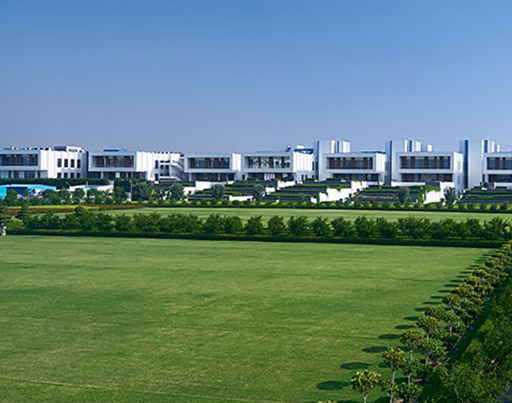




















DS Group India has built a CSR framework focused on measurable community impact across water conservation, livelihood enhancement, education, gender equity and community development. DS Group's CSR Initiatives or the Dharampal Satyapal Charitable Trust (DSCT), showcase how the organisation stands out for its transparent governance, published disclosures and independently recognised programmes.
The CSR structure of DS Group is organised across five major pillars, each designed to address a different aspect of community development. The pillars are:
Below is a table with details of each pillar.
| Pillar | Programme / Initiative | Geography | Beneficiary Community | Verification / Award / Metric Mentioned on CSR Site |
| Water Conservation | Integrated Watershed Development and Resource Management | Rajasthan (Udaipur and Kurabad), Uttar Pradesh (Sirsiya Block in Shrawasti), Madhya Pradesh, Himachal Pradesh, Gujarat (Kutch), Uttarakhand (Nainital) | Arid-zone farming families, marginalised rural households, and water-stressed hill communities | 3rd Joint Winner at National Water Awards 2020; 20th FICCI CSR Award; 8th CSR Impact Award. |
| Livelihood Enhancement | Avartansheel Kheti (Cyclical Organic Farming) | Uttar Pradesh and Madhya Pradesh (Bundelkhand region) | Smallholder and marginal farmers | -3,300 farmers transitioned to chemical-free self-sufficiency |
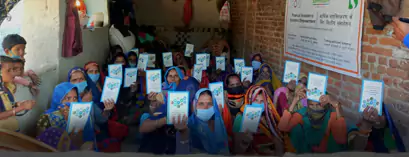
| Livelihood Enhancement | Project Samriddhi | Uttar Pradesh (Jhansi, Lalitpur, Prayagraj) and Madhya Pradesh (Niwari) | Rural women and micro-entrepreneurs | Financial literacy, skill training, and business development for 12,000+ women. |
| Livelihood Enhancement | Vocational Skill Development Centres | Uttar Pradesh (Noida - Chaura and Nithari villages) | Underprivileged and marginalised village women | Handled via Niveda Foundation, which provides structured training in industrial stitching and block printing. |
| Livelihood Enhancement | Scientific Rubber Tappers Training Program | Tripura | Tribal rubber-tapping communities | Over 800 tappers certified across 32 sessions; awarded Think Media INC Best CSR Practices Award and Aaj Tak Care Award. |
| Livelihood Enhancement | SCALE (Sustainable and Comprehensive Agriculture for Livelihood Enhancement) | Karnataka (Shivamogga) | Smallholder farmers | Good Agricultural Practices, FPO strengthening, market linkages |
| Livelihood Enhancement | Strengthening Rural Economy, Nashik | Maharashtra (10 villages, Nashik district) | Tribal communities, primarily women | With Abhibyakti Media Communication; dairy, seed banking, horticulture, honey bee keeping, Mahua Phenyl and Nagali food processing; 200+ women engaged |
| Livelihood Enhancement | Singpho Eco Lodge, Tinsukia | Assam (Inthong village, Margherita) | Singpho tribal community | Built 2009 with DSL support; self-reliant, community-run tourism employment |
| Livelihood Enhancement | Revitalising the Rural Economy, Bokaro and Hazaribagh | Jharkhand (140 villages, Bokaro and Hazaribagh) | -1,000 rural households, incl. migrant workers | Partnered with Pradhan; MGNREGA access, FPO promotion, migrant self-employment support |
| Livelihood Enhancement | WADI Development, Coriander Value-Addition, Livestock (MANTHAN), SCALE (Jodhpur and Baran), Youth Empowerment Academy | Rajasthan (Dungarpur, Jhalawar, Jodhpur, Baran, Sikar/Reengus) | Tribal and marginal farmers, rural livestock owners, school dropouts aged 16-22 | 500 farmers trained in WADI/organic farming (Dungarpur); coriander sorting-grading unit, Jhalawar; MANTHAN livestock programme benefits 2,500+ farmers directly and 15,000+ via breed improvement/vaccination across 78 villages; SCALE reaches 2,000+ farmers (partnered with GRAVIS and Gram Unnati Foundation); Youth Empowerment Academy trains 250+ dropouts (with Shikshantar Sansthan) |
| Livelihood Enhancement | Project BELA, Badrinath | Uttarakhand (Bamni Badrinath village) | Pilgrimage-dependent women's Self-Help Groups | Online tulsi-garland ordering platform run by Samvriddhi Foundation with DS Spiceco support; launched as a COVID-response pivot after pilgrimages stopped cutting off SHG income |
| Gender Equity | Project Saamya (Early-Stage Gender Sensitisation Initiative) | Delhi (Okhla), Uttar Pradesh (Noida, Agra, Lucknow), Madhya Pradesh (Sheopur) | Young boys aged 7 to 11 and their immediate families | Launched in 2020, actively engaged over 900+ boys via interactive, behaviour-modification modules; "Gender Equality Initiative of the Year 2022-23" |
| Education | Creativity Adda | Delhi | Government school students and local school dropouts | Free-learning hubs run interactive, self-paced skill and personality development programs. |
| Education | Educational Support Centres (Non-Formal Bridge and Remedial Education) | Uttar Pradesh (Agra and Lucknow) | Non-school-going children and at-risk student communities | 11 active centres providing morning bridge classes and afternoon academic tutorials to prevent dropouts (with Aryashree Shiksha Samiti). |
| Education | Non-Formal Education for Street Children | Uttar Pradesh (Noida - Nithari village) | Out-of-school street children and slum youth | Foundational literacy and basic education designed to systematically transition and mainstream children into formal schools (with Niveda Foundation). |
| Education | Support for Martyrs' Children and Digital Inclusion | Delhi / National Level | Economically weak students and children of fallen soldiers | Distributed 160 educational tablets for pandemic-era online learning; partnered with Gautam Gambhir Foundation for long-term schooling support. |
| Education | SOS Children's Village Program, Guwahati | Assam (Guwahati) | Orphaned/abandoned children | DS Sons Pvt. Ltd. supports 4 of 16 SOS homes; 43 children mainstreamed into formal schools |
| Education | Improving Learning Outcomes and Mid-Day Meal Kitchen | Rajasthan (Dungarpur, Jhalawar) | School-age children with learning gaps; children needing daily nutrition support | With Pratham: closed learning gaps for -2,600 children in Bichhiwara Block, Dungarpur. With Akshaya Patra Foundation: re-established a 25,000-meal/day kitchen serving 15,000+ children (classes 1–8) in Jhalawar |
| Education | Primary Education Centre and Ananda Permaculture Project | Haryana (Barota village, Karnal; Manesar) | Disadvantaged pre-primary children (Karnal); individuals with autism (Manesar) | Barota: pre-primary education centre with DS Foundation for disadvantaged-section children. Manesar: Permaculture/organic-gardening project with Action for Autism, using outdoor classroom gardening for self-development |
| Education | Hostel for Differently Abled Children, Haldwani | Uttarakhand (Haldwani) | Visually challenged children aged 6-14 | DS Spiceco supports National Association for the Blind (NAB) in constructing a boys' hostel at NAB's residential and vocational training centre |
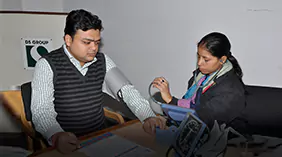
| Others (Healthcare and Culture) | DS Mobile Clinics | North East India and select Delhi/NCR blocks | Unreached rural populations and marginalised communities | Well-equipped mobile medical vans with qualified doctors providing free doorstep consultations, diagnoses, and medicines. |
| Others (Healthcare and Culture) | "Right to Sight" Program and Project Vision | Assam (Kamrup district) and North East India | Rural communities are suffering from curable visual impairments | 15,000+ people screened for cataract-induced blindness; thousands of fully funded eye surgeries, medicines, and spectacles distributed (partnered with Sankara Nethralaya). |
| Others (Healthcare and Culture) | Jail University Project | Rajasthan (Udaipur Jail) | Prison inmates | Inmate rehabilitation through an on-site, fully equipped Music Academy and Recording Studio (partnered with Shikshantar Sansthan). |
| Others (Healthcare and Culture) | Clean Water, Sanitation and Infrastructure | Uttar Pradesh (Lucknow slums) and Haryana (Gurgaon - Chandala village) | Slum residents and rural communities | Constructed 9 community toilet complexes under Swachh Bharat Abhiyan (managed by local committees) and implemented solar street lighting. |
| Others (Healthcare and Culture) | Restoring Heritage | North East India | Local communities and cultural custodian bodies | Structural preservation and restoration of historic monuments, ancient temples, and prominent regional landmarks. |
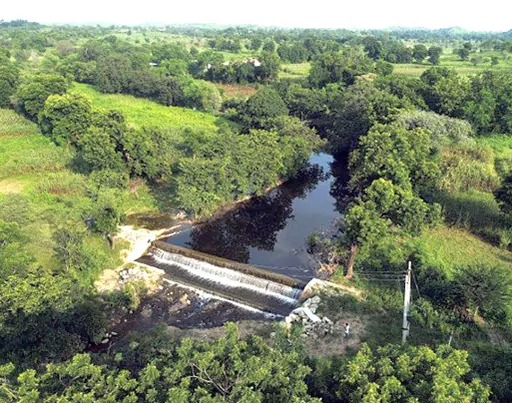
Water Conservation in India remains the most independently verified pillar within DS Group's CSR framework. The organisation's Water Conservation Programmes in India focus on watershed restoration, groundwater recharge and long-term community water security. The company also received the National Water Award 2020 for its Water Economic Zone initiative in Rajasthan.
In Rajasthan, DS Group operates Rajasthan Water Conservation Projects like the Water Economic Zone projects in Udaipur and Kurabad, focused on watershed development and agricultural water management. DS Group also supports rainwater harvesting and groundwater recharge through Uttar Pradesh Water Conservation Projects and Madhya Pradesh Water Conservation Programs.
Through Uttarakhand Water Conservation Projects, DS Group restores spring water sources in Nainital, while Water Conservation Initiatives in Gujarat support Kutch communities. The organisation also strengthens Himalayan ecosystems through Himachal Pradesh Water Conservation Projects, focused on rural water security.
The livelihood enhancement pillar represents one of the broadest CSR programmes within DS Group. The organisation currently works with farming communities across multiple Indian states.
The programme philosophy focuses on capacity building rather than direct welfare distribution. The goal is to strengthen economic resilience through training, agricultural support and market access. Through Livelihood Enhancement projects, DS Group connects environmental and agricultural development.
DS Group works directly with small and marginal farmers on agricultural best practices, crop diversification, organic farming, livestock management and post-harvest systems. This is done through:
Many of these initiatives are linked with water conservation projects. This is especially the case in Rajasthan and Uttar Pradesh, where farming communities receiving watershed support also benefit from agricultural training. This improves both environmental sustainability and household livelihoods.
Education forms another important pillar within DS Group's CSR framework. The organisation operates both community-based education programmes and institution-based learning initiatives.
To learn more, look at DS Group's Education Initiatives, which focus on a dual approach: providing non-formal bridge education to bring out-of-school children into mainstream classrooms, and fostering alternative, creative learning environments for current students.
DS Group operates targeted educational interventions focusing heavily on urban slums, street communities, and underserved clusters across Delhi/NCR, Uttar Pradesh (including Noida, Agra, and Lucknow), and the North Eastern states. This is done through the following initiatives:
These interventions are executed through specific operational models: running morning sessions to prepare non-school-going children for formal admissions, and afternoon remedial tutorials to ensure current students do not drop out due to learning gaps.
DS Group's gender equity initiatives differ from many traditional CSR programmes because they focus on prevention rather than later-stage intervention. The Gender Equity CSR Initiatives in India highlight how DS Group works with young boys before harmful social attitudes become deeply embedded.
Project Saamya launched in 2020 and operates across Delhi, Uttar Pradesh and Madhya Pradesh. These include initiatives focusing on Gender Equity Initiatives in Delhi, Gender Equity Programmes in UP and Gender Equity Programmes in MP.
These programmes engage boys aged 7 to 11 through workshops, activities and discussions focused on empathy, respect and equality. Rather than addressing gender equity only through women-centred interventions, Project Saamya addresses the behavioural roots of inequality by engaging boys early in life, making it a distinctive, prevention-focused CSR initiative in India.
Beyond its major pillars, DS Group also runs broader community development and social awareness initiatives. These CSR Projects and Programmes combine health, livelihood, education and behavioural awareness.
The organisation follows a holistic model that integrates education, livelihood, health and institutional support within the same geographical communities. One important example is the Karnal Community Development Project in Haryana, which demonstrates how multiple interventions can work together within a single community.
The Final Impact Assessment Report - August 2025 and the Impact Assessment Report - Revitalising the Rural Economy as a Response to the COVID-19 Pandemic highlight how DS Group has published detailed assessments related to rural recovery and community support programmes implemented during the Covid 19 period.
Together, these programmes connect social responsibility with behavioural awareness and community participation.
The strength of DS Group's CSR Initiatives lies in its evidence-based structure, with programmes linked to specific geographies, beneficiary groups, published assessments and recognised verification systems. DS Group's Impact Assessments highlight how the group's many initiatives, ranging from water conservation and farmer livelihood enhancement to Project Saamya, are faring. Through these multi-pillar programmes, DS Group demonstrates that meaningful CSR is built through measurable impact, transparency and long-term institutional commitment across communities in several Indian states.